'Jasnne–e-Ara', Prince of Wales Museum, Key Gallery, Mumbai in 1964
'Poem on Canvas', Taj Gallery and Byculla in 1963
‘Black Nude Series’, Pundole Art Gallery, Mumbai in 1963
Held an Exhibition of his paintings, Exclusively in Aid of the National Defense Fund, Roop Gallery in 1963
'Nude Show', Taj Gallery, Mumbai in 1962
One man show at Hyderabad in 1961
Jehangir Art Gallery, Mumbai in 1954,60
'Still Life', Jehangir Art Gallery, Mumbai in 1950
Two shows held in the provincial towns of Surat and Rander in 1948
Exhibition in Matunga, a Mumbai Suburb in 1947
Chetna Restaurant, organized by Kekoo Gandhi, Mumbai in 1944
Bombay Art Society Salon in Rampart Row (now Artists’ Centre), Mumbai in 1942
Group Exhibitions:
'Paintings Exhibition in aid of the National Defence Fund', Shridharni Gallery, New Delhi in 1963
Calcutta Group-Progressive Artists Group, Joint Exhibition, Kolkata in 1950
'Progressive Artist's Group', Prithvi Gallery, Mumbai; Shridharni Gallery, New Delhi; Baroda in 1949-55
Inaugural Exhibition Progressive Artist's Group, at Bombay Art Society, Mumbai
Honours and Awards in 1948
Fellow from Lalit Kala Akademi, New Delhi in 1984
Sponsored by Lalit Kala Akademi, visited France as Guest of French Government and Visited Bulgaria as an Exchange Artist on Invitation of the Bulgarian Artists Association in 1961
Gold Medal, Bombay Art Society, Mumbai in 1952
Founder Member, Progressive Artists Group, Mumbai in 1947
Governor's Prize and Anuual Prize, Bombay Art Society’s Annual Exhibition, Mumbai in 1944
Simla Art Society, Shimla in 1942,39,38
Bombay Art Society’s Annual Exhibition, Mumbai in 1941
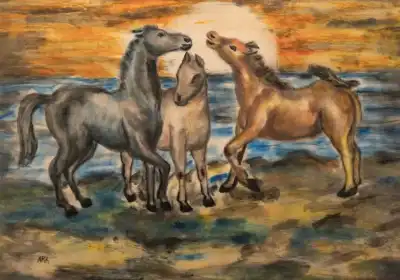
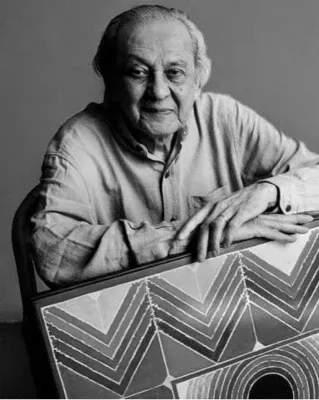
KH Ara, credited with establishing Still life as a genre of painting in India, was one of the founders of Progress Artists’ movement. He is also considered as the first contemporary Indian painter to meticulously use the female nude as a
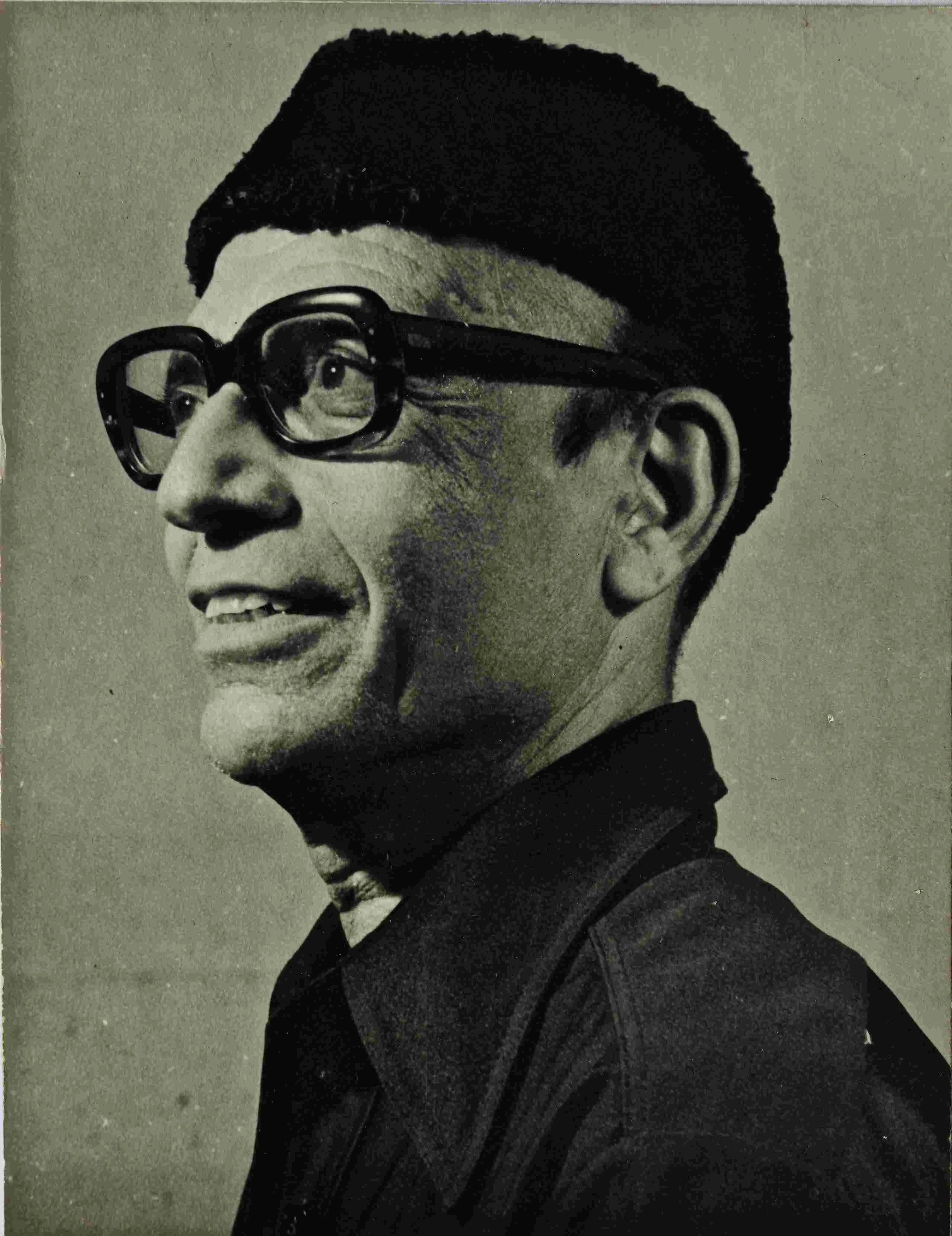
KH Ara, credited with establishing Still life as a genre of painting in India, was one of the founders of Progress Artists’ movement. He is also considered as the first contemporary Indian painter to meticulously use the female nude as a subject.
Krishnaji Howlaji Ara was born in Secunderabad in 1914. He grew up in Mumbai and in early youth, he earned a living by cleaning cars and later found employment with an English family as a houseboy. While employed, he nevertheless found time to engage with his passion for painting and it soon caught the attention of first Rudy von Leyden, an art critic from the Times of India, and then Walter Langhammer, the Editor of the Illustrated Weekly of India. Langhammer was so impressed by Ara's skill that he had him enrolled at the J.J. School of Art.
Ara began his art career doing landscapes and paintings on socio-historical themes but he is best known for his still life and nude paintings. While he initially used watercolours and gouaches, where his use of the impasto effect often made them resemble oil paintings, he later moved on to the use of oil paints. A deliberate roughness in both drawing and applying paint is the most striking aspect of his still life paintings. The hallmark of Ara’s still life works was the astonishing effect he created in white. The colour which in itself is artificial as it is not found in nature, was used by him to mould form. In a composition with a jug, a bowl of grapes, and a plate of apples, the white—thickly-layered and with the colours showing through—overflows one from the other making them part of the canvas and yet distinct from it.
Ara’s ceaseless experiments with bowls, fruits and vases with flowers were to develop a compositional syntax to which he lent a rugged buoyancy and an unremitting compassion. His singular achievement lay in coalescing these elements into a distinctive style, which made quite an impact on the period. In his art practice, Ara neither wished to shock with raw eroticism as Souza did, nor did he want to revisit folk art in the manner of Husain. He was a modernist for whom the form and language of art preceded all other social and political motivations.
Having experienced life from the underside, Ara was an innate humanist. He had participated in the Salt Satyagraha during the Civil disobedience movement and was jailed for five months. Ara was known to help many young artists in need of organizing their shows, sending out invitations, and visiting newspaper offices. The most enduring quality that remained with him was his compassion for others, which manifested itself in small acts of kindness. On his fiftieth birthday in 1965, paintings from all periods of his life were exhibited and Ara insisted on the price of each work being a uniform Rs 100. This was at a time when his work could be sold at multiple times of this value.
Ara won several awards, beginning with the annual prizes of the Bombay Art Society, the Governor’s Prize, and an award from U.N.E.S.C.O., all before Independence. The artist passed away in Mumbai in 1985 at the age of 71.
Academics
Certificate in Foundation Course, Ketkar Institute of Art, Mumbai
Awards
Fellow from Lalit Kala Akademi, New Delhi in 1984
Sponsored by Lalit Kala Akademi, visited France as Guest of French Government and Visited Bulgaria as an Exchange Artist on Invitation of the Bulgarian Artists Association in 1961
Gold Medal, Bombay Art Society, Mumbai in 1952
Founder Member, Progressive Artists Group, Mumbai in 1947
Governor's Prize and Anuual Prize, Bombay Art Society’s Annual Exhibition, Mumbai in 1944
Simla Art Society, Shimla in 1942,39,38
Bombay Art Society’s Annual Exhibition, Mumbai in 1941
KH Ara, credited with establishing Still life as a genre of painting in India, was one of the founders of Progress Artists’ movement. He is also considered as the first contemporary Indian painter to meticulously use the female nude as a subject.
Krishnaji Howlaji Ara was born in
KH Ara, credited with establishing Still life as a genre of painting in India, was one of the founders of Progress Artists’ movement. He is also considered as the first contemporary Indian painter to meticulously use the female nude as a subject.
Krishnaji Howlaji Ara was born in Secunderabad in 1914. He grew up in Mumbai and in early youth, he earned a living by cleaning cars and later found employment with an English family as a houseboy. While employed, he nevertheless found time to engage with his passion for painting and it soon caught the attention of first Rudy von Leyden, an art critic from the Times of India, and then Walter Langhammer, the Editor of the Illustrated Weekly of India. Langhammer was so impressed by Ara's skill that he had him enrolled at the J.J. School of Art.
Ara began his art career doing landscapes and paintings on socio-historical themes but he is best known for his still life and nude paintings. While he initially used watercolours and gouaches, where his use of the impasto effect often made them resemble oil paintings, he later moved on to the use of oil paints. A deliberate roughness in both drawing and applying paint is the most striking aspect of his still life paintings. The hallmark of Ara’s still life works was the astonishing effect he created in white. The colour which in itself is artificial as it is not found in nature, was used by him to mould form. In a composition with a jug, a bowl of grapes, and a plate of apples, the white—thickly-layered and with the colours showing through—overflows one from the other making them part of the canvas and yet distinct from it.
Ara’s ceaseless experiments with bowls, fruits and vases with flowers were to develop a compositional syntax to which he lent a rugged buoyancy and an unremitting compassion. His singular achievement lay in coalescing these elements into a distinctive style, which made quite an impact on the period. In his art practice, Ara neither wished to shock with raw eroticism as Souza did, nor did he want to revisit folk art in the manner of Husain. He was a modernist for whom the form and language of art preceded all other social and political motivations.
Having experienced life from the underside, Ara was an innate humanist. He had participated in the Salt Satyagraha during the Civil disobedience movement and was jailed for five months. Ara was known to help many young artists in need of organizing their shows, sending out invitations, and visiting newspaper offices. The most enduring quality that remained with him was his compassion for others, which manifested itself in small acts of kindness. On his fiftieth birthday in 1965, paintings from all periods of his life were exhibited and Ara insisted on the price of each work being a uniform Rs 100. This was at a time when his work could be sold at multiple times of this value.
Ara won several awards, beginning with the annual prizes of the Bombay Art Society, the Governor’s Prize, and an award from U.N.E.S.C.O., all before Independence. The artist passed away in Mumbai in 1985 at the age of 71.
Academics
Certificate in Foundation Course, Ketkar Institute of Art, Mumbai
Awards
Fellow from Lalit Kala Akademi, New Delhi in 1984
Sponsored by Lalit Kala Akademi, visited France as Guest of French Government and Visited Bulgaria as an Exchange Artist on Invitation of the Bulgarian Artists Association in 1961
Gold Medal, Bombay Art Society, Mumbai in 1952
Founder Member, Progressive Artists Group, Mumbai in 1947
Governor's Prize and Anuual Prize, Bombay Art Society’s Annual Exhibition, Mumbai in 1944
Simla Art Society, Shimla in 1942,39,38
Bombay Art Society’s Annual Exhibition, Mumbai in 1941
Bombay Art Society, Mumbai in 1939
Exhibitions
Solo Exhibitions:
Artists’ Centre, Mumbai in 1978
Jehangir Art Gallery, Mumbai in 1973
Pundole Art Gallery, Mumbai in 1966
'Jasnne–e-Ara', Prince of Wales Museum, Key Gallery, Mumbai in 1964
'Poem on Canvas', Taj Gallery and Byculla in 1963
‘Black Nude Series’, Pundole Art Gallery, Mumbai in 1963
Held an Exhibition of his paintings, Exclusively in Aid of the National Defense Fund, Roop Gallery in 1963
'Nude Show', Taj Gallery, Mumbai in 1962
One man show at Hyderabad in 1961
Jehangir Art Gallery, Mumbai in 1954,60
'Still Life', Jehangir Art Gallery, Mumbai in 1950
Two shows held in the provincial towns of Surat and Rander in 1948
Exhibition in Matunga, a Mumbai Suburb in 1947
Chetna Restaurant, organized by Kekoo Gandhi, Mumbai in 1944
Bombay Art Society Salon in Rampart Row (now Artists’ Centre), Mumbai in 1942
Group Exhibitions:
'Paintings Exhibition in aid of the National Defence Fund', Shridharni Gallery, New Delhi in 1963
Calcutta Group-Progressive Artists Group, Joint Exhibition, Kolkata in 1950
'Progressive Artist's Group', Prithvi Gallery, Mumbai; Shridharni Gallery, New Delhi; Baroda in 1949-55
Inaugural Exhibition Progressive Artist's Group, at Bombay Art Society, Mumbai
Honours and Awards in 1948
Fellow from Lalit Kala Akademi, New Delhi in 1984
Sponsored by Lalit Kala Akademi, visited France as Guest of French Government and Visited Bulgaria as an Exchange Artist on Invitation of the Bulgarian Artists Association in 1961
Gold Medal, Bombay Art Society, Mumbai in 1952
Founder Member, Progressive Artists Group, Mumbai in 1947
Governor's Prize and Anuual Prize, Bombay Art Society’s Annual Exhibition, Mumbai in 1944
Simla Art Society, Shimla in 1942,39,38
Bombay Art Society’s Annual Exhibition, Mumbai in 1941
'Jasnne–e-Ara', Prince of Wales Museum, Key Gallery, Mumbai in 1964
'Poem on Canvas', Taj Gallery and Byculla in 1963
‘Black Nude Series’, Pundole Art Gallery, Mumbai in 1963
Held an Exhibition of his paintings, Exclusively in Aid of the National Defense Fund, Roop Gallery in 1963
'Nude Show', Taj Gallery, Mumbai in 1962
One man show at Hyderabad in 1961
Jehangir Art Gallery, Mumbai in 1954,60
'Still Life', Jehangir Art Gallery, Mumbai in 1950
Two shows held in the provincial towns of Surat and Rander in 1948
Exhibition in Matunga, a Mumbai Suburb in 1947
Chetna Restaurant, organized by Kekoo Gandhi, Mumbai in 1944
Bombay Art Society Salon in Rampart Row (now Artists’ Centre), Mumbai in 1942
Group Exhibitions:
'Paintings Exhibition in aid of the National Defence Fund', Shridharni Gallery, New Delhi in 1963
Calcutta Group-Progressive Artists Group, Joint Exhibition, Kolkata in 1950
'Progressive Artist's Group', Prithvi Gallery, Mumbai; Shridharni Gallery, New Delhi; Baroda in 1949-55
Inaugural Exhibition Progressive Artist's Group, at Bombay Art Society, Mumbai
Honours and Awards in 1948
Fellow from Lalit Kala Akademi, New Delhi in 1984
Sponsored by Lalit Kala Akademi, visited France as Guest of French Government and Visited Bulgaria as an Exchange Artist on Invitation of the Bulgarian Artists Association in 1961
Gold Medal, Bombay Art Society, Mumbai in 1952
Founder Member, Progressive Artists Group, Mumbai in 1947
Governor's Prize and Anuual Prize, Bombay Art Society’s Annual Exhibition, Mumbai in 1944
Simla Art Society, Shimla in 1942,39,38
Bombay Art Society’s Annual Exhibition, Mumbai in 1941